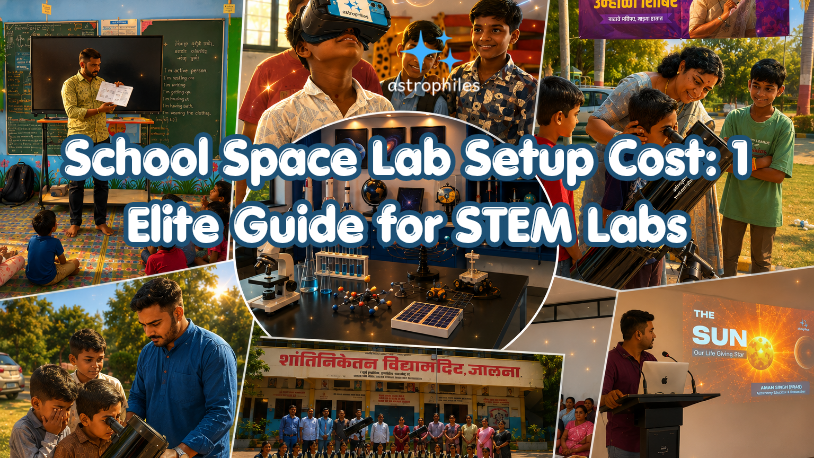
The average school space lab setup cost ranges between ₹50,000 for a Tier 1 portable solar observation kit to over ₹5,00,000 for a Tier 2 computerized campus observatory. Investing in this infrastructure is the most effective way to align with experiential learning mandates and elevate an institution’s STEM prestige.
For modern educational trusts and principals, the traditional science laboratory is no longer enough to stand out. Parents and educational boards are demanding hands-on, practical applications of physics and mathematics.
Building a dedicated astronomy infrastructure is a massive differentiator for private institutions. However, purchasing a telescope off the internet without a structured integration plan usually results in expensive equipment gathering dust in a storage closet.
Here is the definitive breakdown of the school space lab setup cost, equipment tiers, and why faculty training is the real secret to a successful STEM program.
Why Invest in an Institutional Space Lab?
Allocating budget toward astronomical hardware delivers an exceptional Return on Investment (ROI) for the entire institution:
-
Experiential Physics: Students stop memorizing textbook formulas about optics and classical mechanics, and start observing them in real time.
-
Admissions & Prestige: A “Campus Observatory” is a premium marketing asset during admissions season, signaling a commitment to elite science education.
-
NEP 2020 Compliance: The National Education Policy heavily emphasizes hands-on, multidisciplinary learning. A space lab perfectly aligns with these governmental directives.
Breakdown: The School Space Lab Setup Cost by Tier
Institutions should implement their infrastructure in phases, ensuring the faculty and students master the fundamentals before moving to advanced astrophysics.
Tier 1: The Portable Solar & Lunar Lab
-
Estimated Budget: ₹50,000 – ₹1,50,000
-
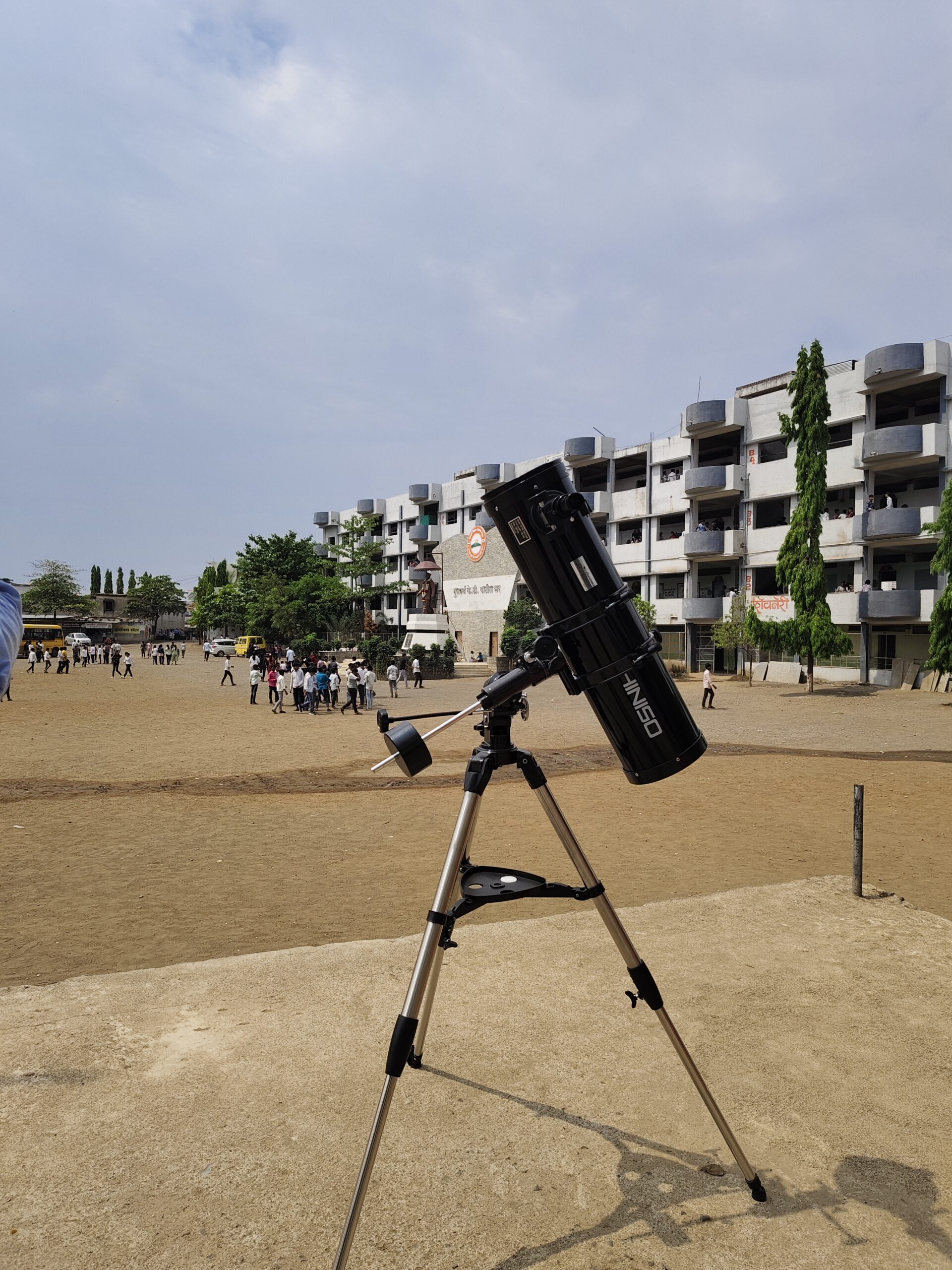
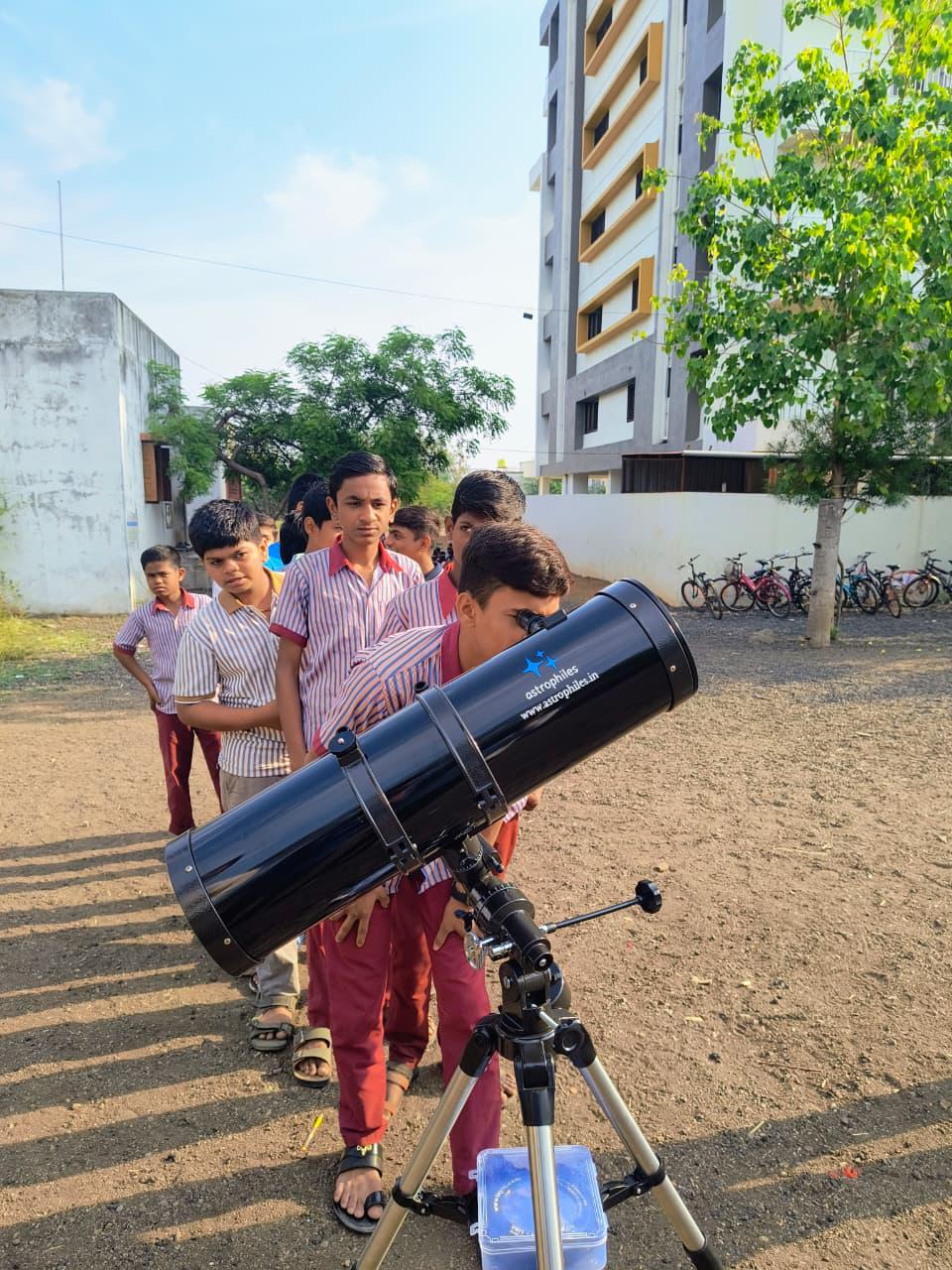
The Hardware: Large aperture manual Dobsonians, wide-field refractors, and certified optical-density solar filters.
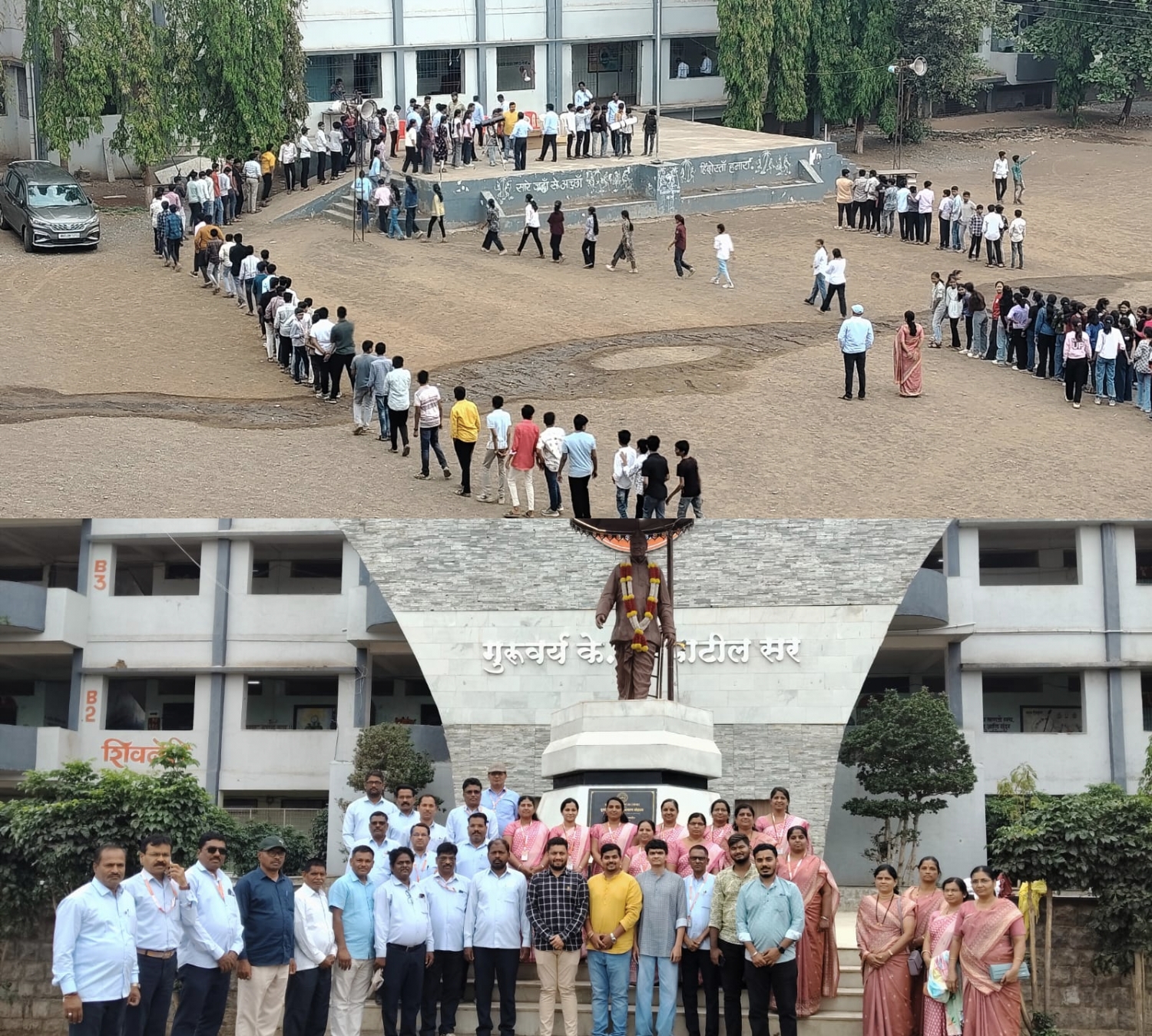
The Strategy: Nighttime astronomy is logistically challenging for standard school hours. A Tier 1 setup focuses on “Surya Darshan” (daylight solar observation). This allows for maximum student volume. By utilizing these portable rigs, our core Astrophiles team recently coordinated a 10-hour continuous observation workshop in Dharashiv, allowing over 7,200 students to safely view active sunspots in a single day.
Tier 2: The Deep-Sky & Planetary Observatory
-
Estimated Budget: ₹2,50,000 – ₹5,00,000+
-
The Hardware: Heavy-duty, motorized Schmidt-Cassegrain telescopes (8-inch to 11-inch) on computerized equatorial mounts.
The Strategy: This tier transforms a school into a regional STEM hub. A motorized mount automatically tracks planets across the sky, meaning a teacher can align the telescope once, and an entire classroom of 40 students can view the rings of Saturn without the target drifting out of the eyepiece.
Curious about the optical differences in these setups? Read our comprehensive guide on the refractor vs reflector telescope to understand the physics of light gathering).
The Hidden Cost: Faculty Training & Curriculum
The single biggest mistake an educational trust makes when evaluating the school space lab setup cost is neglecting faculty development. A ₹3 Lakh motorized mount is useless if the science department doesn’t know how to polar align it.
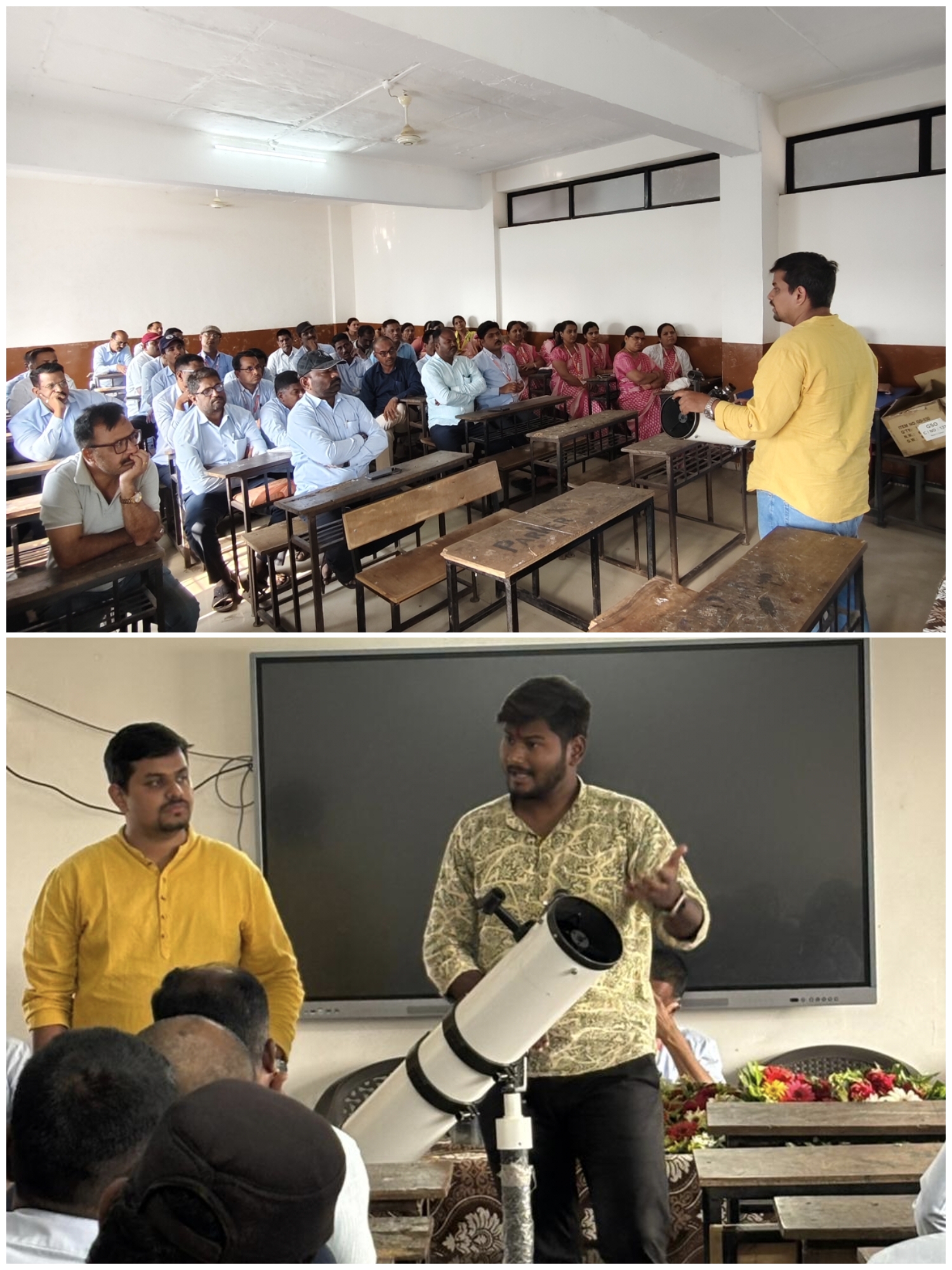
To guarantee ROI, a portion of the budget must be allocated to expert-led teacher training. Instructors like Meet, Abhishek, and Aman ensure that your faculty understands not just the hardware, but how to map celestial events directly to the middle and high school physics syllabus.
For broader insights on integrating space sciences into institutional frameworks, the ISRO Capacity Building program highlights the national push for space education.
Build Your Professional Space Lab with Astrophiles
Do not leave your STEM infrastructure to guesswork.
Astrophiles provides complete, end-to-end School Space Lab Setup consulting. From selecting the perfect optical gear for your region’s light pollution, to hands-on faculty training, to providing structured 6-week curriculum frameworks—we manage the deployment so you can focus on education. Contact us today to build your campus observatory.