
The meteor shower calendar 2026 isn’t over after the Perseids. In fact, four more major showers are still coming this year, and one of them typically outperforms even August’s peak. Here is exactly when to look up for the rest of 2026, what to expect from each, and how to actually see them.
After the Perseids (August), the remaining 2026 meteor showers are the Draconids (early October), Orionids (late October), Leonids (mid-November), and Geminids (mid-December)—with the Geminids typically acting as the strongest shower of the entire year.
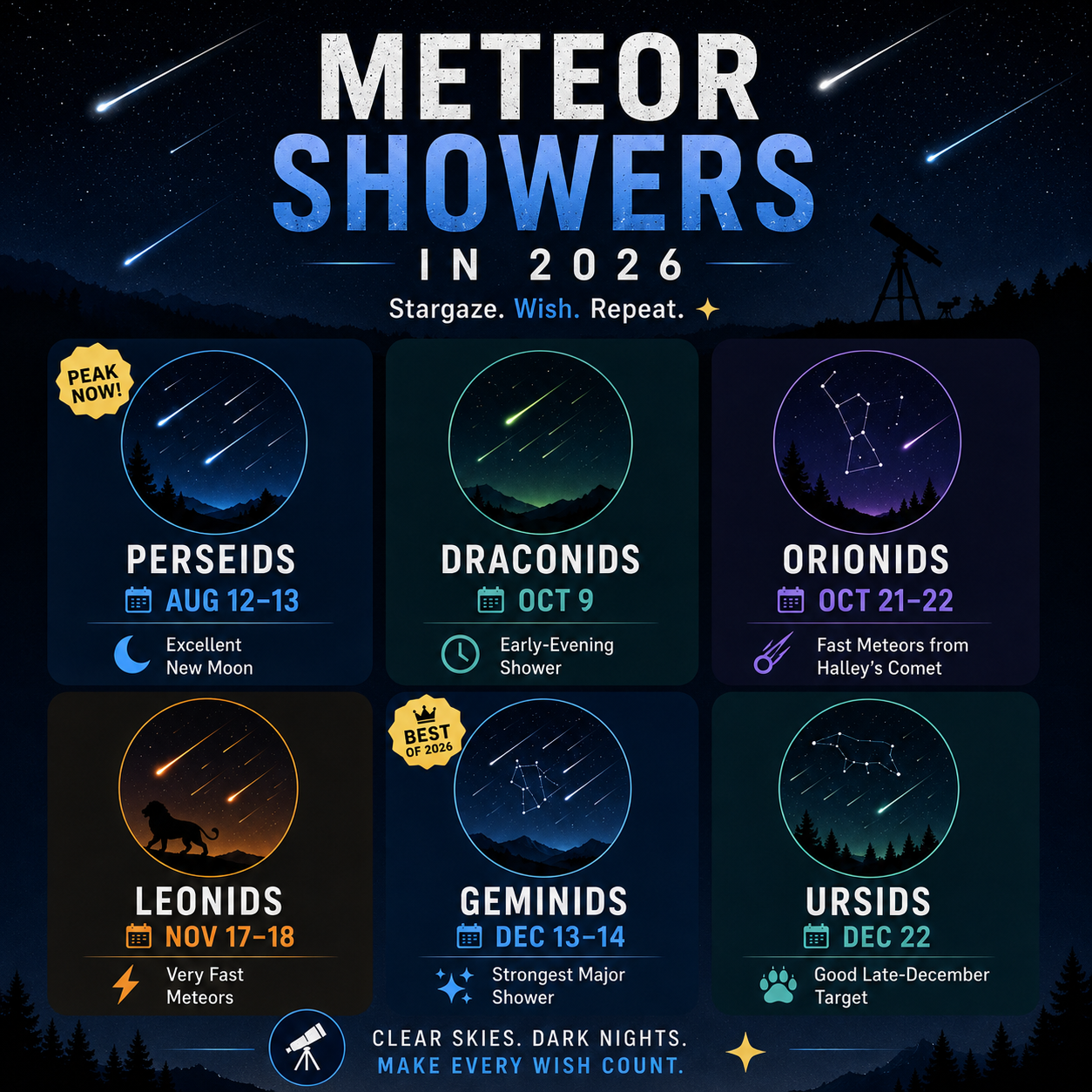
Quick-Fact Table:Meteor Shower Calendar 2026
| Shower | Peak Date | Typical Rate | Parent Body | Best Viewing |
| Draconids | Early October | 10–20/hr (unpredictable) | Comet 21P/Giacobini-Zinner | Evening, not just pre-dawn |
| Orionids | Late October | 15–25/hr | Halley’s Comet debris | After midnight |
| Leonids | Mid-November | 10–15/hr (occasional storms) | Comet Tempel-Tuttle | Pre-dawn |
| Geminids | Mid-December | 100–150/hr | Asteroid 3200 Phaethon | All night, best after 10 PM |
Field Note: The Geminids consistently outperform the Perseids in our own observing sessions, but almost nobody plans for it, probably because December cold keeps people indoors. If you only prioritize one shower on this list, make it the Geminids; the rates genuinely justify bundling up.
What Is the Next Meteor Shower After the Perseids?
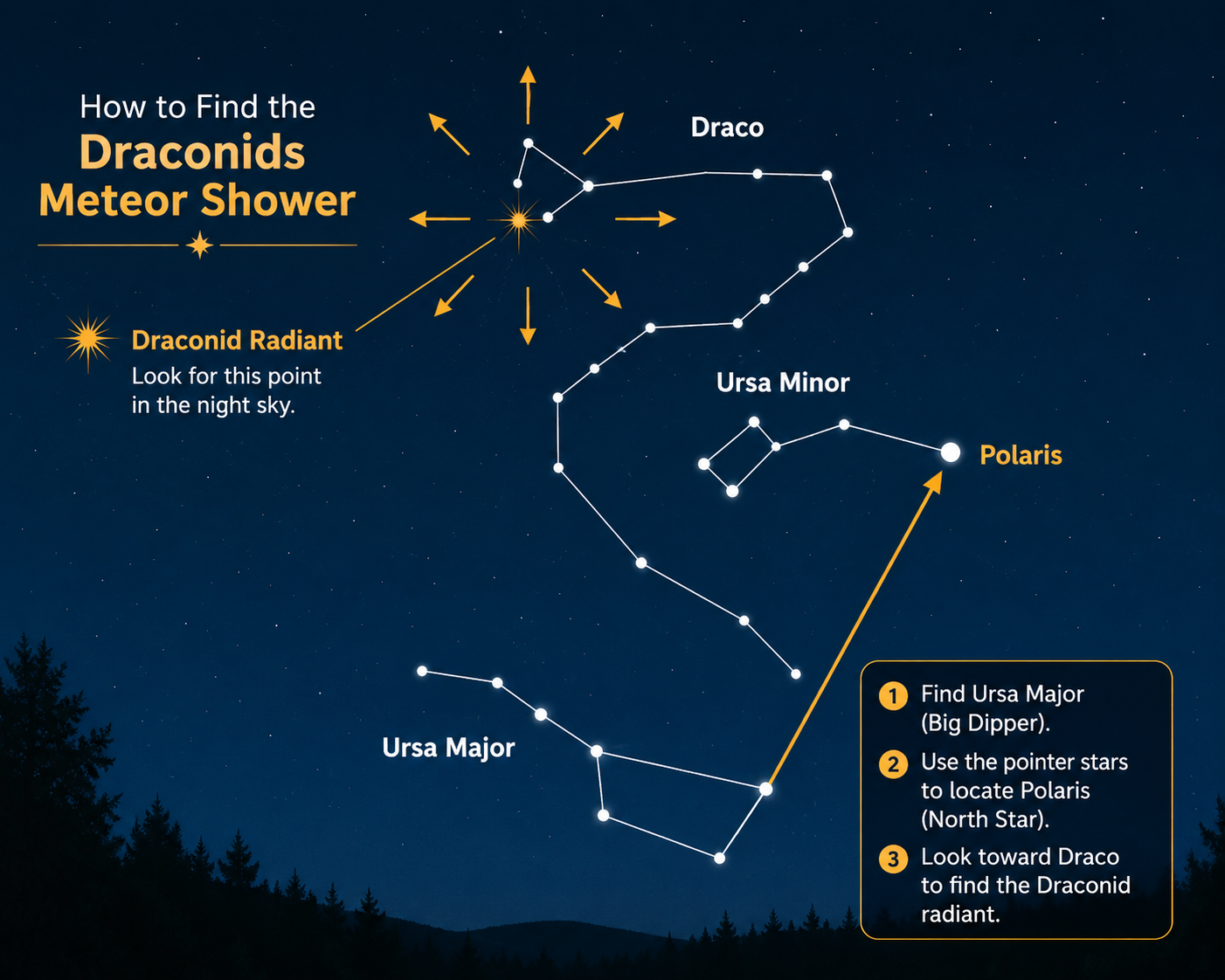
The Draconids, active in early October, are next on the calendar. Unlike most showers, they are actually better viewed in the early evening rather than after midnight, since the radiant (in the constellation Draco) is highest right after sunset. Rates are usually modest 10 to 20 meteors per hour, but the Draconids have a history of unpredictable outbursts, so it is worth a look even without high expectations.
Orionids 2026: When and How to Watch
The Orionids peak in late October and are debris from Halley’s Comet, meaning every meteor you see is a literal fragment of one of the most famous comets in history. Expect 15 to 25 meteors per hour under dark skies, best viewed after midnight when the radiant (near Orion) climbs higher.
Expert Opinion: Skip the “best telescope for meteors” articles. Telescopes are actively counterproductive for meteor showers because they narrow your field of view when you need to scan as much sky as possible. Save that budget for a reclining chair or a decent camera setup (Wide-angle camera lens for night sky photography) instead.
(However, if your school or institution is looking to set up an observatory for daytime solar and planetary viewing, check out our institutional buyer’s guide on the 5 Best Telescopes for Schools in India).
Leonids 2026: Worth Watching Despite Modest Rates
The Leonids peak mid-November with typically modest rates (10 to 15/hr), but they are historically significant. This shower has produced some of the most dramatic meteor storms ever recorded, with rates briefly spiking into the thousands per hour in past cycles. While 2026 isn’t predicted to be a storm year, the Leonids are worth a quick check simply because of that extreme unpredictability.
Geminids 2026: The Best Meteor Shower of the Year
If you watch only one shower after the Perseids, make it this one. The Geminids peak mid-December and typically produce 100 to 150 meteors per hour under dark skies, nearly double the Perseids’ peak rate.
Unlike most showers, the Geminids are also visible from early evening through dawn, not just in the pre-dawn hours, making them far more practical for people who cannot stay up until 2:00 AM.
Geminids 2026 Complete Viewing Guide will be uploaded soon!!
How to Prepare for the Rest of 2026’s Meteor Showers
-
Dress for the season: October and December showers mean genuine cold-weather viewing. A warm blanket or insulated layers matter more here than any high-tech gadget.
-
Check the Moon phase before each peak: A bright Moon near peak night can cut visible meteor counts significantly, regardless of the shower’s official rate.
-
Get away from city lights: Even driving 30 to 45 minutes away from a major metro dramatically improves what you will actually see.
Portable stargazing camp chair
Frequently Asked Questions
What is the next meteor shower after the Perseids in 2026?
The Draconids, peaking in early October, are the next shower after the Perseids, followed immediately by the Orionids in late October.
Which meteor shower has the highest rate in 2026?
The Geminids, peaking in mid-December, typically produce the highest rates of any shower in the year—often 100 to 150 meteors per hour under dark skies.
Do I need a telescope to watch these meteor showers?
No. Meteor showers are best seen with the naked eye across a wide field of view. A telescope physically narrows your view and makes fast-moving meteors much harder to spot.
When is the best time to watch the Geminids?
The Geminids are highly visible from early evening straight through to dawn, making them one of the few major showers practical to watch without staying up past midnight.