
3I/ATLAS is a newly discovered interstellar comet that has captured global attention after NASA-confirmed observations showed it passing safely through our Solar System. Detected by the Asteroid Terrestrial-impact Last Alert System (ATLAS), this object is only the third confirmed interstellar visitor ever identified—making it a rare and scientifically valuable event.
This article explains what 3I/ATLAS is, whether we can see it, what NASA says, its size, closest approach to Earth, and addresses common questions and misconceptions.
What exactly is 3I/ATLAS?
3I/ATLAS is an interstellar object, specifically a comet, that originated outside our Solar System. The designation “3I” means it is the third interstellar object ever confirmed, after 1I/‘Oumuamua and 2I/Borisov.
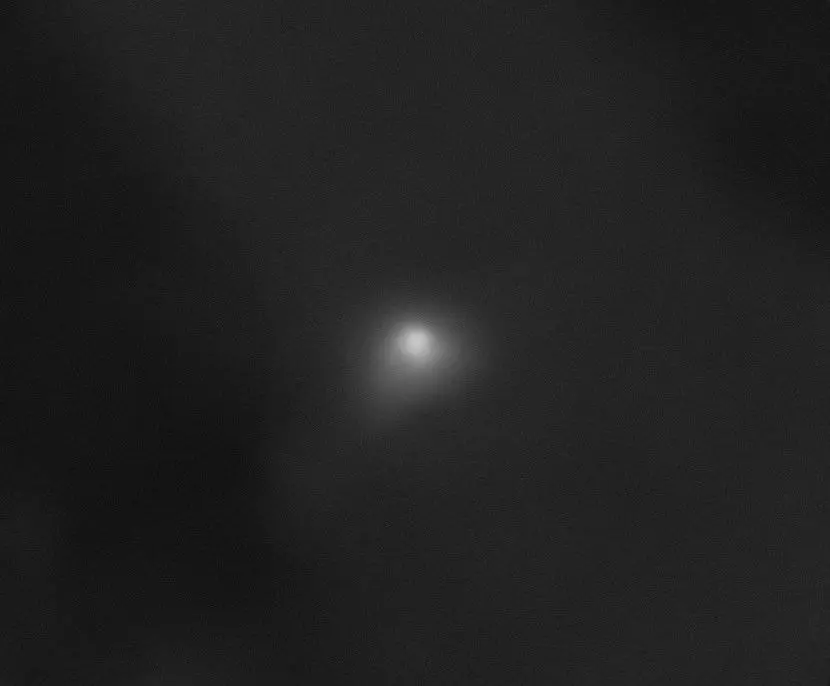
Credit: NASA/JPL-Caltech/University of Arizona
Unlike typical comets bound to the Sun, 3I/ATLAS follows a hyperbolic orbit, proving it is not gravitationally tied to the Solar System. Observations show a coma and gas activity, confirming its cometary nature.
How was 3I/ATLAS discovered?
The comet was first detected by the Asteroid Terrestrial-impact Last Alert System, a NASA-funded sky survey designed to identify near-Earth objects.
Astronomers quickly noticed:
-
Extremely high inbound velocity
-
A trajectory inconsistent with Solar System objects
-
Visible outgassing typical of comets
Follow-up observations confirmed its interstellar origin.
What does NASA say about 3I/ATLAS?
According to NASA, 3I/ATLAS poses no threat to Earth. Its orbit is precisely tracked and keeps it at a safe distance throughout its passage.
NASA scientists emphasize its importance because:
-
It carries material formed around another star
-
It helps compare extrasolar comets with Solar System comets
-
It improves detection methods for future interstellar objects
NASA and international observatories are continuing detailed studies.
Will we see the 3I/ATLAS from Earth?
For most people, no.
-
3I/ATLAS is not visible to the naked eye
-
Professional observatories and space telescopes can image it
-
Advanced amateur astronomers with large telescopes may detect it under dark skies
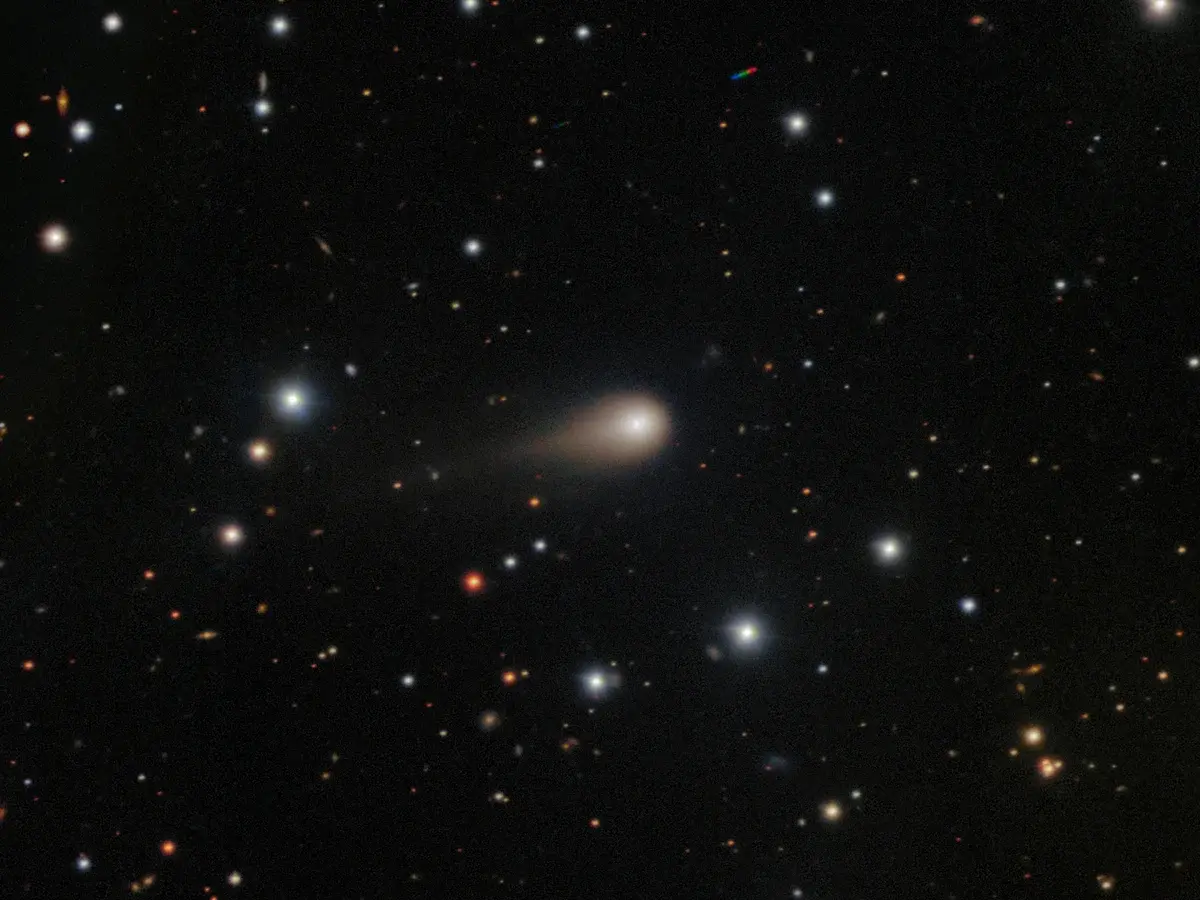
Credit: International Gemini Observatory/NOIRLab/NSF/AURA/Shadow the Scientist. Image processing: J. Miller & M. Rodriguez (International Gemini Observatory/NSF NOIRLab), T.A. Rector (University of Alaska Anchorage/NSF NOIRLab), M. Zamani (NSF NOIRLab).
Images shared online are long-exposure or processed telescope images, not naked-eye views.
When does 3I/ATLAS make its closest approach to Earth?
The comet makes its closest approach to Earth at a distance far greater than the Moon’s orbit. Headlines such as “Newly-discovered 3I/ATLAS comet makes closest approach to Earth” refer to its observational peak, not danger.
During this time:
-
The comet appears brightest
-
Scientists conduct spectroscopy and composition analysis
-
NASA releases updated images and data
What would happen if 3I/ATLAS hit Earth?
This is a frequent “People Also Ask” query—but it is purely hypothetical.
-
3I/ATLAS will not hit Earth
-
Its orbit is stable and well-measured
-
There is zero impact risk
NASA confirms there is no scenario where this comet threatens Earth.
Is 3I/ATLAS an alien object?
No. Searches like “3I/ATLAS alien” or “3I/ATLAS spacecraft” are driven by speculation, not evidence.
All observed properties—speed, brightness variation, and gas emission—are fully consistent with a natural comet. There is no indication of artificial origin.
3I/ATLAS size and composition
Preliminary studies suggest:
-
Size: hundreds of meters to a few kilometers
-
Composition: ice, dust, and organic compounds
-
Activity: moderate cometary outgassing
Ongoing observations aim to compare its chemistry with comets formed in our Solar System.
Why is 3I/ATLAS important for science?
3I/ATLAS provides a rare opportunity to:
-
Study material from another star system
-
Understand how common interstellar objects may be
-
Improve early detection of fast-moving extrasolar bodies
Each interstellar visitor refines our understanding of planetary formation across the galaxy.
Frequently Asked Questions
Is 3I/ATLAS dangerous?
No. NASA confirms it poses no risk to Earth.
Can I see 3I/ATLAS without a telescope?
No. It is too faint for naked-eye visibility.
Why is it called 3I/ATLAS?
“3I” means the third interstellar object; “ATLAS” is the discovery survey.
Is 3I/ATLAS bigger than ‘Oumuamua?
Current estimates suggest it may be larger, but precise measurements are ongoing.
3I/ATLAS is not dangerous, not artificial, and not visible without powerful telescopes—but it is scientifically extraordinary. As only the third confirmed interstellar object ever observed, it offers astronomers a unique glimpse into material formed around another star.
Expect continued updates, sharper images, and refined measurements—but no cause for concern.
Read Similar Interesting Blogs Here