
The Leonids meteor shower 2026 is one of the most historically famous astronomical events on the calendar. Known for occasionally producing terrifyingly beautiful “meteor storms” where thousands of shooting stars fall every hour, the Leonids hold a special place in the hearts of stargazers.
If you are wondering if there will be a Leonid meteor storm 2026, the short answer is no. However, 2026 offers something almost as good: absolutely perfect, moonless dark skies during the peak. Because the moon will set very early in the evening, this year provides an incredible opportunity to catch the fast, bright fireballs this shower is known for.
Here is exactly when to watch the Leonids, where to look, and how to stay warm.
When to Watch the Leonids Peak
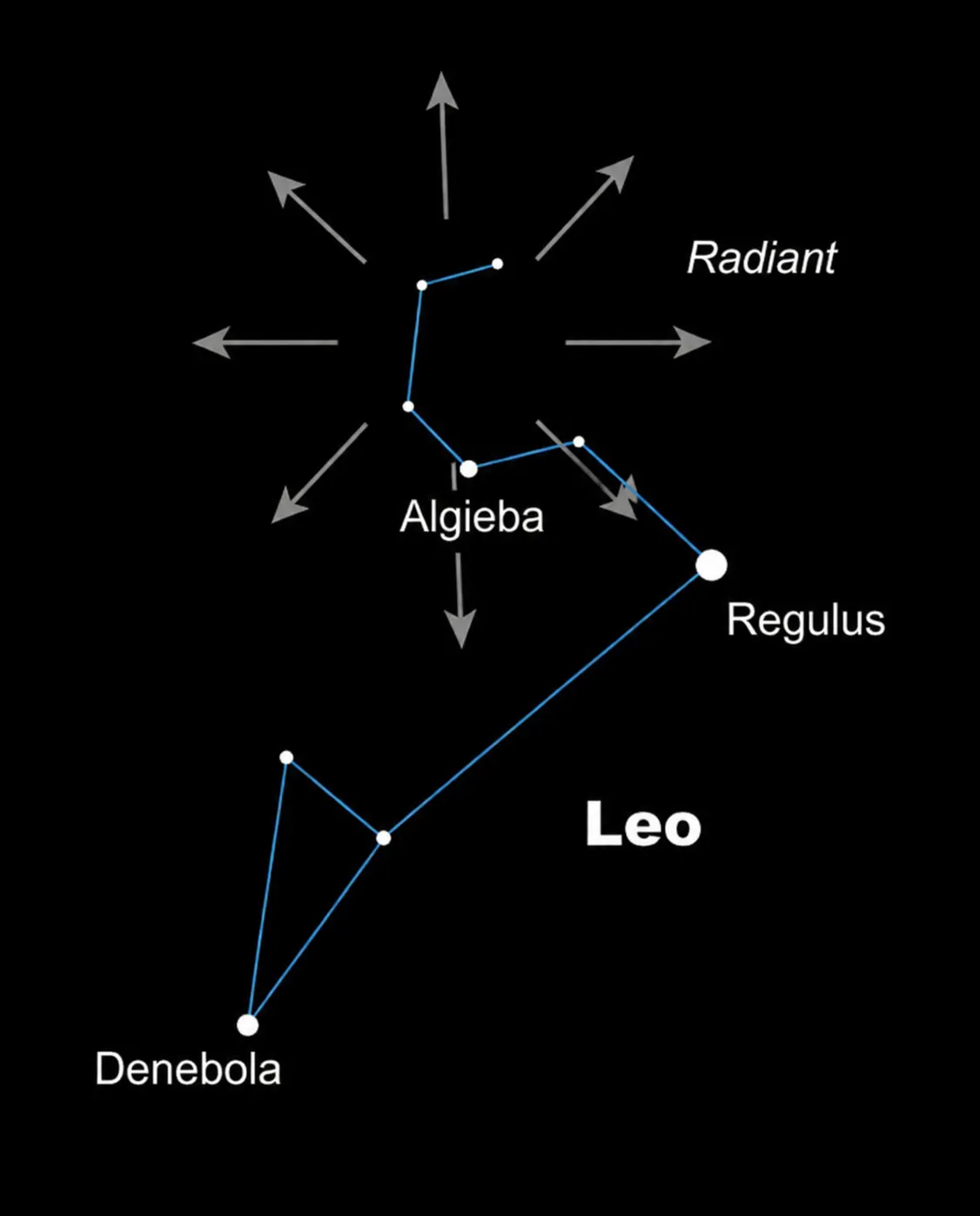
The Leonids are active throughout November, but the shower reaches its absolute maximum during the late night of November 17 and the early morning of November 18, 2026.
To maximize your chances of seeing the Leonids meteor shower 2026, you need to be outside between 2:00 AM and dawn. This is when the constellation Leo rises high enough above the eastern horizon to give you a clear view of the meteor streaks.
The 2026 Dark Sky Advantage
Expert Insight: When planning astronomy workshops or observing sessions, the moon is usually our biggest obstacle. But not this time.
For the Leonids meteor shower 2026, the moon is a very thin waxing crescent. More importantly, it will set before 7:00 PM local time on peak night. This means that by the time midnight rolls around, the sky will be completely pitch black. Without any lunar glare washing out the fainter shooting stars, you will have pristine viewing conditions to catch the typical rate of 10 to 15 meteors per hour.
Where to Look for Leonids
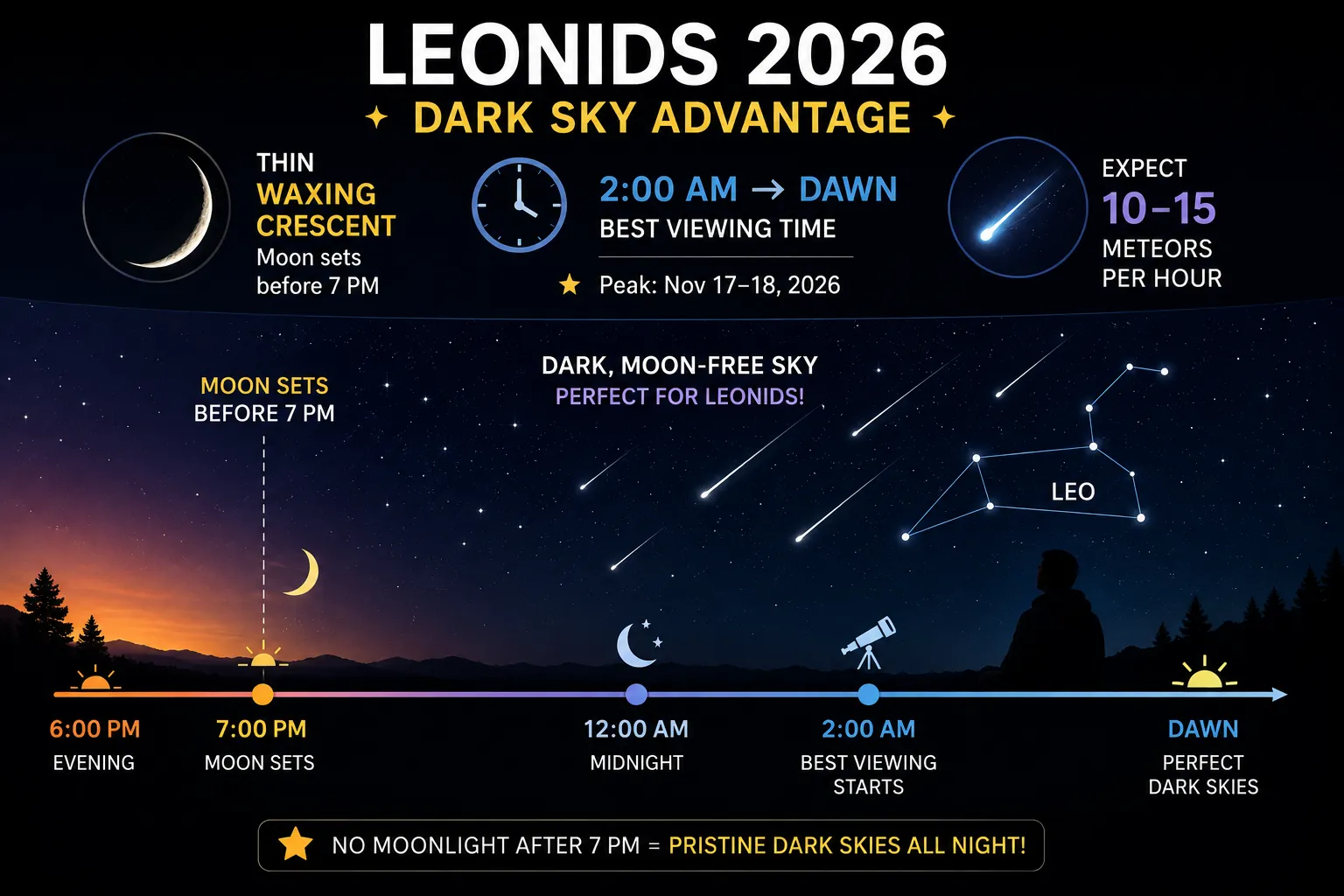
If you are unsure where to look for Leonids, the key is to find the constellation Leo. The meteors appear to radiate from the “sickle” asterism, which looks like a backward question mark forming the head of the lion.
However, do not stare directly at Leo! The meteors originating right at the radiant will look like short flashes. Instead, look roughly 45 degrees away from Leo, scanning the darkest patches of the sky directly above you. The Leonids hit Earth’s atmosphere at a staggering 71 kilometers per second (159,000 mph), frequently leaving glowing trains of ionized gas that linger for several seconds.
Essential Cold-Weather Observing Gear
Sitting completely still under the November night sky requires serious thermal preparation. Telescopes and binoculars are useless for meteor showers; instead, invest your gear budget into comfort.
- Zero-Gravity Lounge Chair: Looking straight up for hours is physically demanding. A reclining chair keeps your neck pain-free and your eyes on the sky. 👉 Reclining Outdoor Zero Gravity Chair
- Thermal Base Layers: You will lose heat quickly sitting in the dark. Proper insulated thermal wear is a necessity for November astronomy. 👉 Heavyweight Thermal Base Layer Set
- Red Light Headlamp: Preserve your night vision while safely navigating your stargazing site or checking star maps. 👉 Astronomer’s Red Light Headlamp
Note: Are you an educator putting together middle school physics and astronomy lesson plans for the winter? Ensure your students have the right gear by checking out our 5 Best Telescopes for Schools in India.
Frequently Asked Questions (FAQ)
Will there be a Leonid meteor storm 2026?
No. While the Leonids are famous for historic storms (most recently in 1999 and 2001), 2026 is not predicted to be a storm year. Expect a steady, reliable rate of 10 to 15 meteors per hour during the peak.
What comet causes the Leonids meteor shower 2026?
The Leonids are created by debris left behind by Comet 55P/Tempel-Tuttle. Earth passes through this trail of cosmic dust every November.
Where to look for Leonids in the night sky?
The meteors radiate from the constellation Leo the Lion, which rises in the east after midnight. For the best view, look about 45 degrees away from Leo to see the longest meteor streaks.