
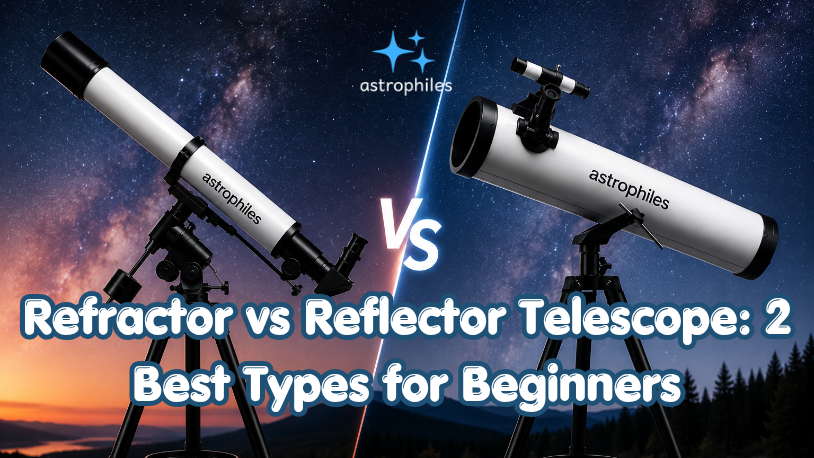
A refractor vs reflector telescope comparison is the first thing most new stargazers look for when starting their journey into the cosmos. While both instruments serve the same purpose gathering light to see distant objects they use completely different physics to achieve that goal.
At Astrophiles, we believe that understanding your hardware is the first step toward becoming a true astronomer. Whether we are conducting a record-breaking Surya Darshan workshop or setting up a school space lab, choosing the right optical system is a critical decision.
Here is the definitive, science-based breakdown of the refractor vs reflector telescope debate to help you decide which is right for your school or backyard.
Refractor vs Reflector Telescope: Understanding the Key Differences
To choose the right instrument, you must understand how light interacts with lenses versus mirrors. Here is how these two systems compare in the real world.
1. The Refractor (Lens-Based)
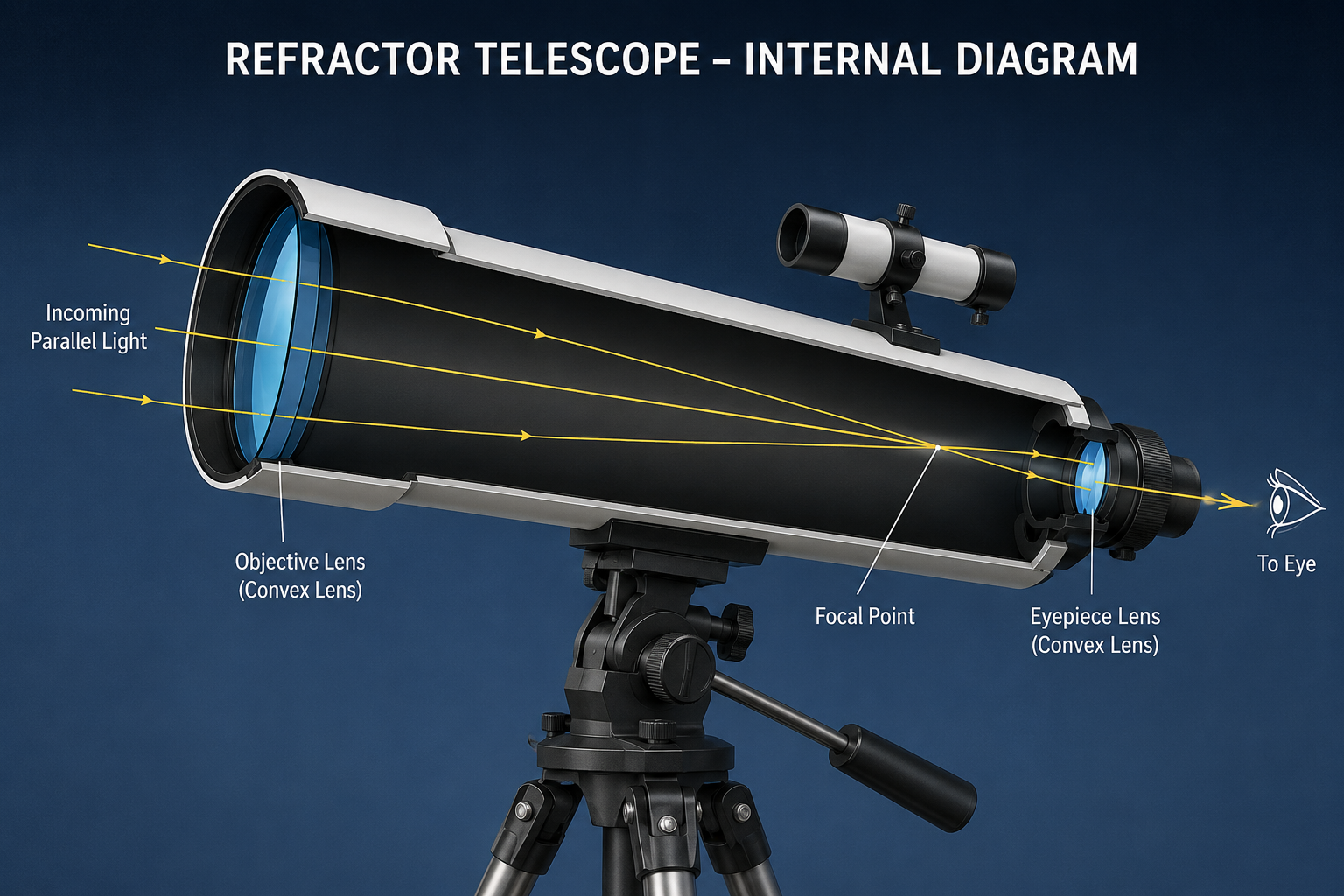
The refractor is the “classic” telescope design. It uses a glass objective lens at the front to collect and bend (refract) light toward the eyepiece.
-
Best For: High-contrast views of the Moon and planets.
-
Maintenance: Low. The tube is sealed, keeping dust away from the optics.
-
The Downside: High-quality glass is expensive. Large refractors can also suffer from “chromatic aberration,” where a purple fringe appears around bright stars.
2. The Reflector (Mirror-Based)
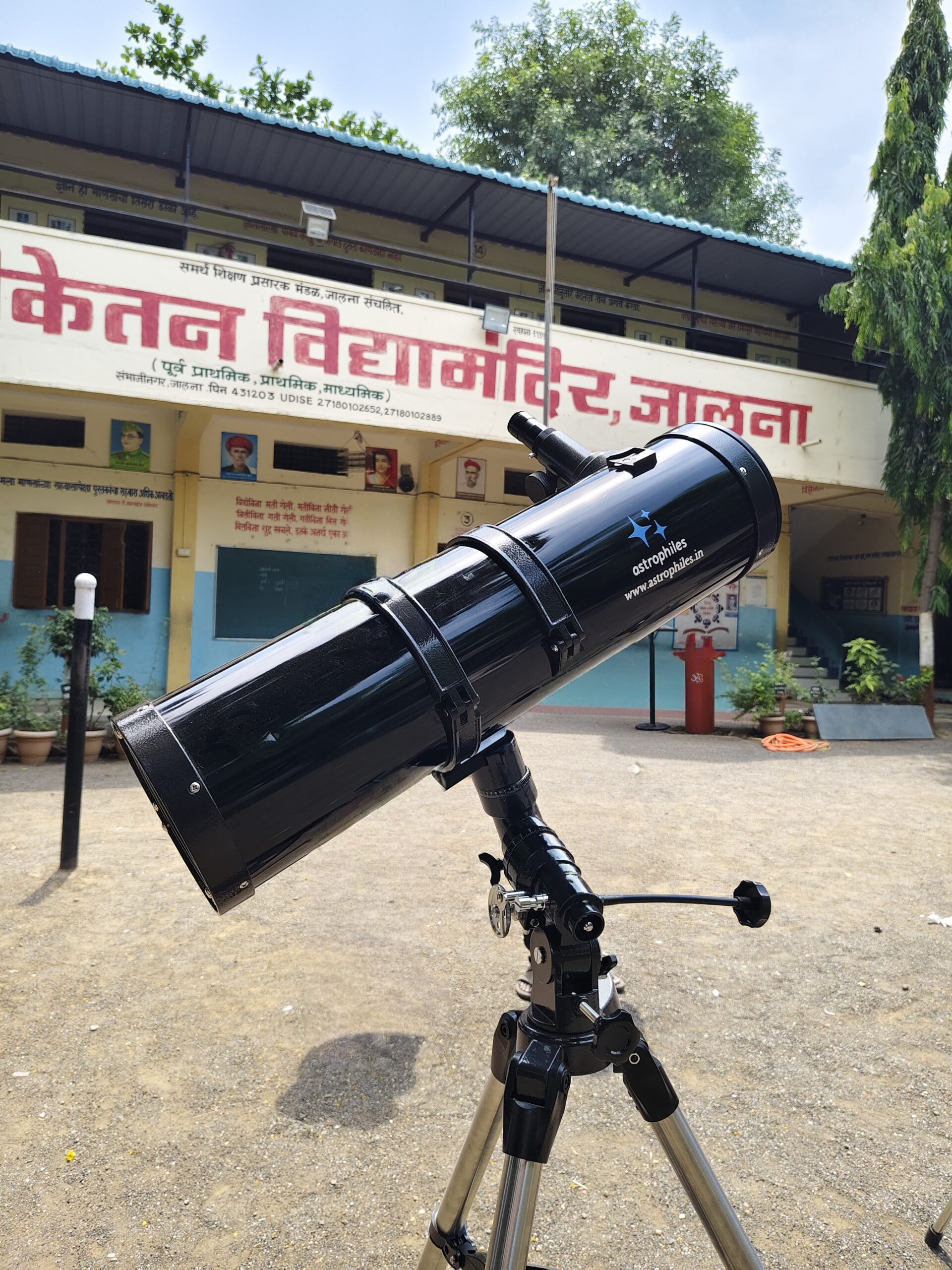
Invented by Isaac Newton, the reflector telescope uses a curved primary mirror at the bottom of the tube to bounce (reflect) light toward a secondary mirror and into your eye.
-
Best For: Faint deep-space objects like nebulae and galaxies.
-
Value: High. You get much more aperture (light-gathering power) for your money compared to a refractor.
-
The Downside: The open-tube design requires occasional “collimation” (aligning the mirrors), and the mirrors may need cleaning over several years.
The Physics of Light Gathering
When comparing a refractor vs reflector telescope, we always tell our students that “Aperture is King.” The wider the telescope, the more light it collects. However, the way they handle that light differs.
According to the laws of optics, a lens bends light at different angles depending on the color (wavelength). This is why professional-grade refractors require complex “apochromatic” lenses to keep images sharp. Conversely, a mirror reflects all colors equally, making a large refractor vs reflector telescope choice often come down to whether you prefer planetary detail or deep-space brightness.
Which Should You Choose?
-
Choose a Refractor if: You want a durable, “grab-and-go” telescope for viewing the Moon and bright planets from an urban area like Mumbai or Thane.
-
Choose a Reflector if: You have access to darker skies and want to see “deep-sky” objects like the Andromeda Galaxy or the Orion Nebula.
For more technical details on how NASA chooses its optical systems for missions, you can explore their guide on space telescope optics.
Ready to start? The Celestron Inspire 100AZ Refractor is a fantastic, low-maintenance entry point for any student or hobbyist. Check the latest price on Amazon here.
Build a Space Lab at Your School
Are you looking to move beyond the refractor vs reflector telescope debate and build a professional-grade observatory for your students?
Astrophiles specializes in School Space Lab setups, faculty training, and interactive physics workshops. We help educational institutions turn abstract science into hands-on discovery. Contact us today to consult on your school’s STEM infrastructure!