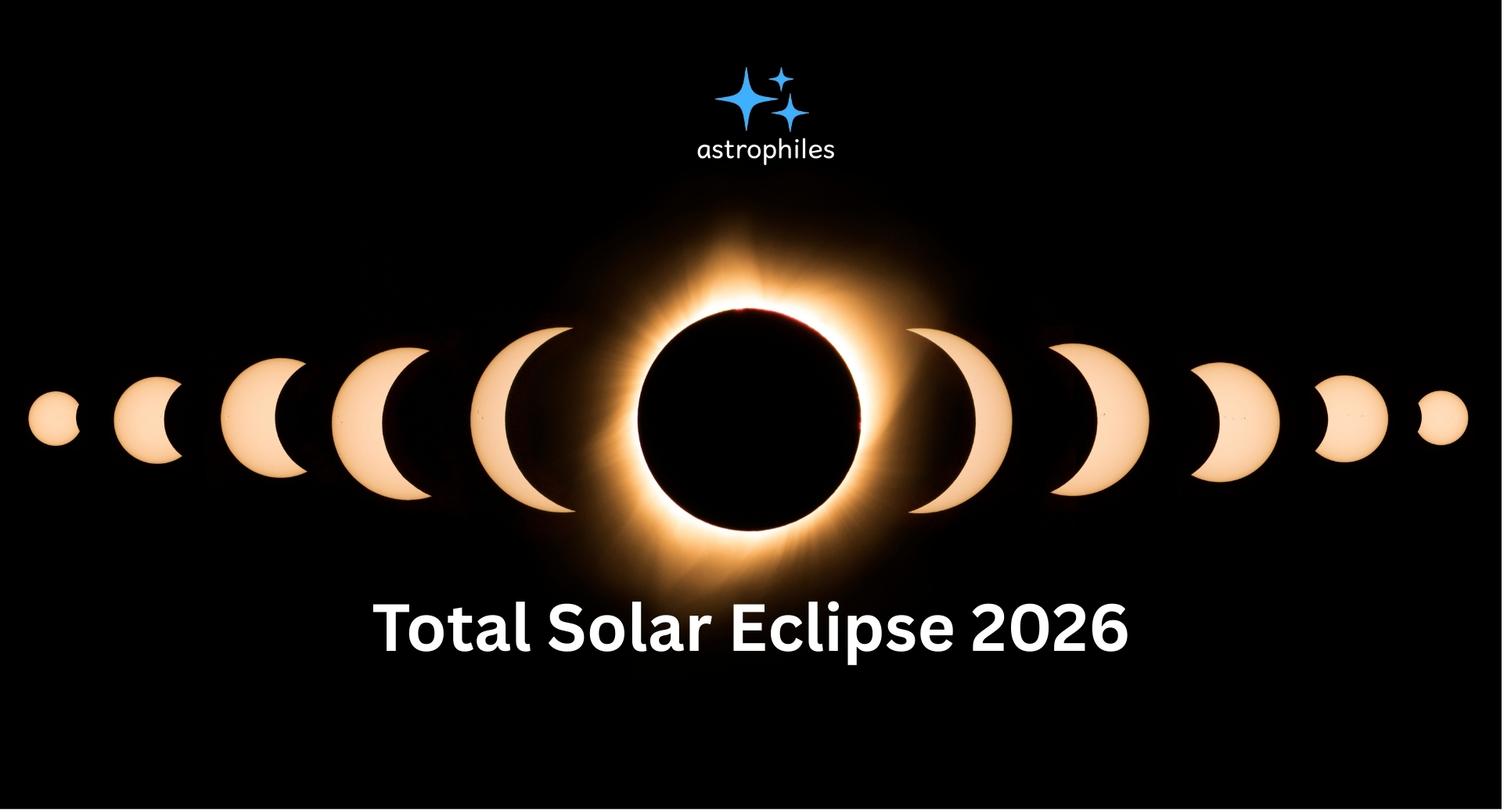
The Total Solar Eclipse August 12 2026 is set to be the most significant celestial event of the decade for Europe. Marking the first time in 27 years that mainland Europe will witness totality, this Total Solar Eclipse August 12 2026 offers a rare “sunset corona” that stargazers won’t want to miss.
By the Astrophiles Team
2026 Eclipse Quick-Fact Table
| Key Detail | Information |
| Date | Wednesday, August 12, 2026 |
| Path of Totality | Russia, Greenland, Iceland, Spain, Portugal |
| Max Totality Duration | 2m 18s (Western Iceland) |
| Indian Standard Time | Totality starts approx. 11:15 PM IST (Aug 12) |
| Next Total Eclipse | August 2, 2027 (Spain & North Africa) |
Why the 2026 Eclipse is a “Must-See”
We’ve been waiting since 1999 for a moment like this. While the 2024 eclipse belonged to North America, 2026 is Europe’s turn to go dark. For those of us at Astrophiles, this isn’t just another celestial event—it’s the “Golden Hour Eclipse.”
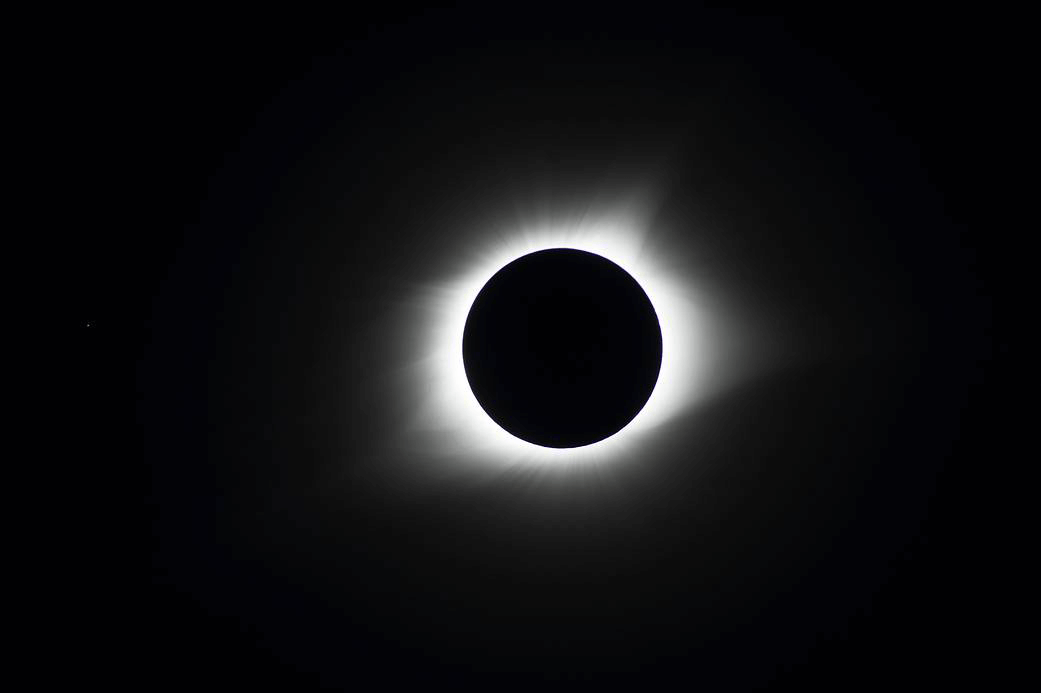
Because the eclipse happens so late in the day, the sun will be hanging low on the horizon. This creates a rare photographic opportunity where the blacked-out sun (the corona) will be surrounded by the orange and pink hues of a Mediterranean sunset. It’s the kind of visual that only happens once in a lifetime.
Where to Watch the Total Solar Eclipse August 12 2026
Choosing your viewing spot is a trade-off between the length of the darkness and the clarity of the sky. Here is how we see the two main options:
Iceland: The Dramatic Edge
If you want the longest possible time in the shadow, Iceland is your destination. At the Látrabjarg cliffs, you’ll get over two minutes of totality.
-
The Vibe: Dramatic, volcanic, and raw.
-
The Risk: The weather in Iceland is notoriously unpredictable. There is roughly a 60% chance of clouds, so you have to be ready to drive to a clear patch at a moment’s notice.
Spain: The Sunny Choice
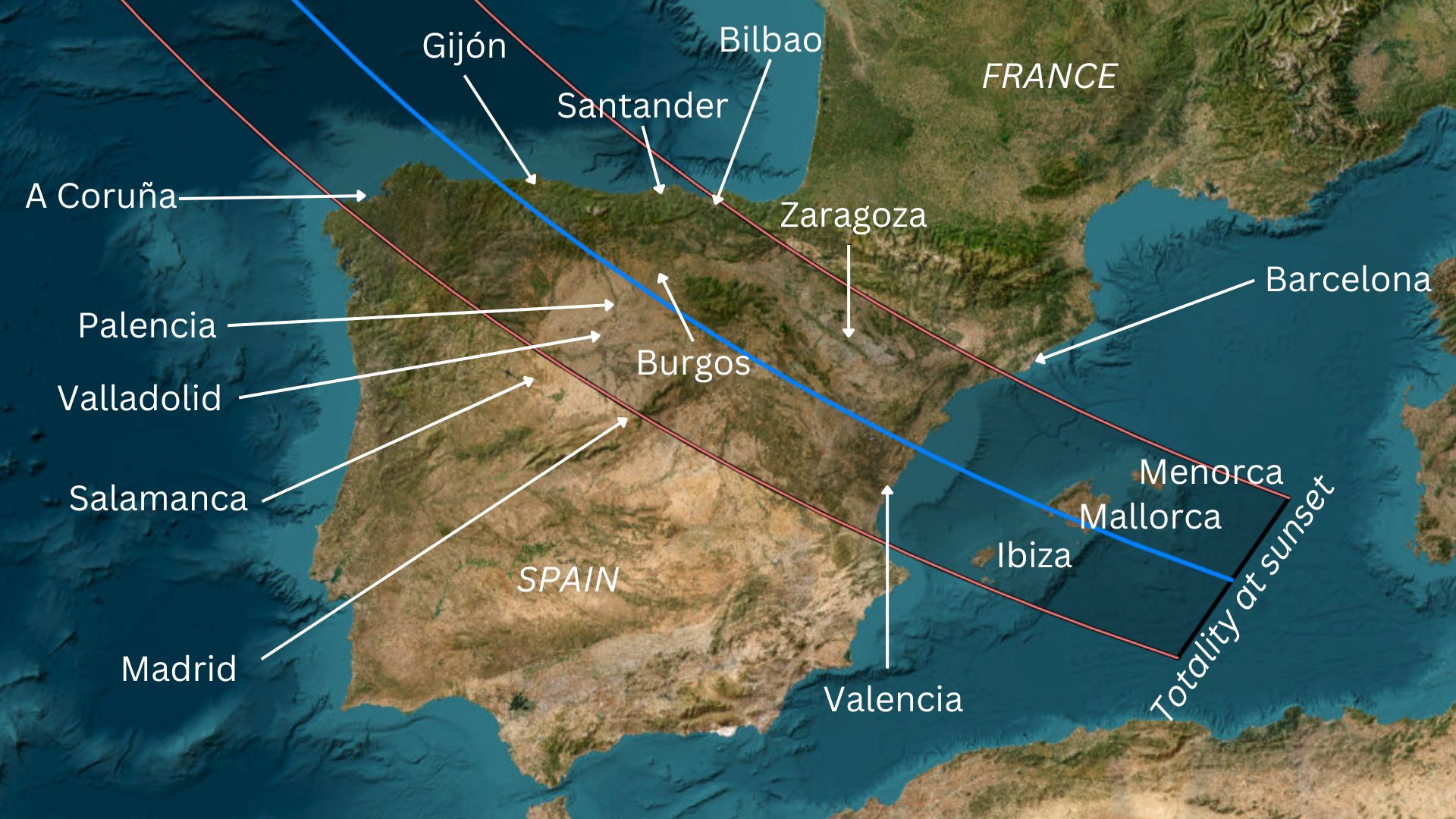
Most of our team is eyeing Spain for its reliability. The path of totality cuts right through the heart of the country, from the northern coast down toward the Mediterranean.
-
The Vibe: Warm, festive, and clear.
-
The Risk: In Spain, the sun will be extremely low—between 2° and 10° above the horizon. This means if you are standing behind a tall building or a mountain, you will miss the whole thing! You need a perfectly flat western horizon or a high vantage point.
Totality Timings (August 12, 2026)
Here is when the darkness hits major cities:
-
Reykjavik, Iceland: 17:48 GMT | Duration: 1m 00s
-
A Coruña, Spain: 20:27 CEST | Duration: 1m 16s
-
Zaragoza, Spain: 20:29 CEST | Duration: 1m 24s
-
Palma, Mallorca: 20:31 CEST | Duration: 1m 30s (Eclipse occurs at sunset)
Can we see it from India?
Unfortunately, the August 12 eclipse will not be visible from the Indian subcontinent as it occurs during our nighttime. However, that doesn’t mean you have to miss out! We will be hosting a Live Sky-Watch on Astrophiles, linking up with observers on the ground in Spain to bring the “Golden Corona” directly to your screens in real-time.
Safety Checklist for the Total Solar Eclipse August 12 2026

-
Safety First: You must use ISO 12312-2 certified eclipse glasses until the sun is 100% covered.
-
Photography: If you’re using your phone, grab a clip-on solar filter now. Don’t wait until August, as prices usually triple a month before the event.
-
Stay Updated: Join our newsletter as we track the weather patterns leading up to the big day.
1 thought on “The Great European Eclipse: Total Solar Eclipse August 12, 2026 – The Ultimate Guide”