
The most anticipated astronomical events in April 2026 include the Full Pink Moon on April 2, a rare four-planet alignment on April 18, and the peak of the Lyrid meteor shower on April 22-23. Stargazers will also have the chance to spot two bright comets reaching perihelion.
If you are planning your stargazing calendar, you will not want to miss the astronomical events in April 2026. This month offers a spectacular lineup of celestial phenomena that cater to everyone from backyard beginners with bare eyes to advanced amateur astronomers with heavy-duty telescopes. With the transition into warmer spring nights, observing the cosmos becomes a much more comfortable and rewarding experience.
Quick Facts: April 2026 Celestial Highlights
-
April 2: The Full “Pink” Moon
-
April 3: Mercury at Greatest Western Elongation
-
April 4: Comet C/2026 A1 (MAPS) reaches Perihelion
-
April 18: 4-Planet Alignment (Mercury, Mars, Saturn, Neptune)
-
April 19: Comet C/2025 R3 (PanSTARRS) reaches Perihelion
-
April 22-23: Peak of the Lyrid Meteor Shower
A Complete Guide to the Best Astronomical Events in April 2026
From ancient meteor showers to icy visitors from the outer solar system, here is exactly what to look for in the night sky this month.
1. The Full Pink Moon (April 2)
Kicking off the top astronomical events in April 2026 is the glorious Full Pink Moon. Peaking in the early morning hours of April 2, this is the first full moon of the spring season. The moon will appear brilliantly illuminated all night long, offering incredible views of its craters and maria (dark basaltic plains).
Despite its famous moniker, the moon will not actually turn pink. The name “Pink Moon” originates from Native American traditions, marking the early springtime blooming of the creeping phlox flower.
2. Comet C/2026 A1 (MAPS) at Perihelion (April 4)
One of the most thrilling astronomical events in April 2026 is the arrival of Comet C/2026 A1 (MAPS). On April 4, this comet reaches perihelion, which is its closest physical approach to the Sun. As the solar radiation blasts the comet’s icy nucleus, it could develop a magnificent, glowing tail.
Comets are notoriously unpredictable, but astronomers are optimistic that MAPS could brighten enough to become a naked-eye object. If it survives its close encounter with the Sun without fragmenting, it will be a spectacular target for your optics.
3. The Rare 4-Planet Alignment (April 18)
When tracking astronomical events in April 2026, early risers are in for a special treat on April 18. Looking toward the eastern horizon just before sunrise, you will be able to witness a rare 4-planet alignment featuring Mercury, Mars, Saturn, and Neptune.
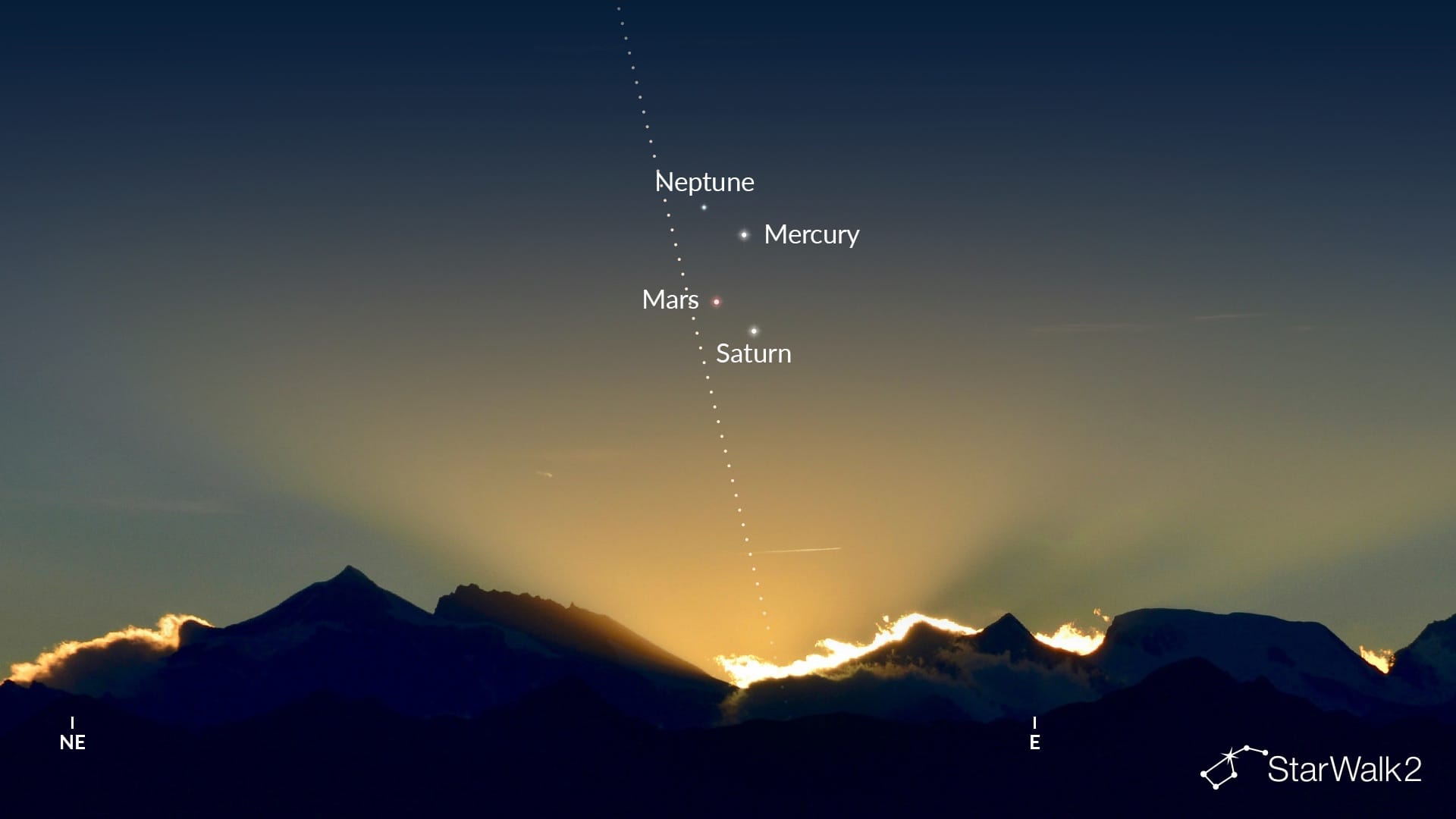
This celestial “planet parade” is a trick of perspective, as the planets are separated by millions of miles in space but appear to line up from our viewpoint on Earth. You can easily spot Mars, Saturn, and Mercury with the naked eye, but you will need an optical aid to catch the faint blue glow of Neptune.
4. Comet C/2025 R3 (PanSTARRS) at Perihelion (April 19)
Just two weeks after MAPS, a second icy visitor enters the spotlight. Comet C/2025 R3 (PanSTARRS) will reach its own perihelion on April 19. While it may not be as dramatic as MAPS, PanSTARRS is considered a very stable comet and is less likely to disintegrate near the Sun.
5. The Lyrid Meteor Shower Peak (April 22-23)
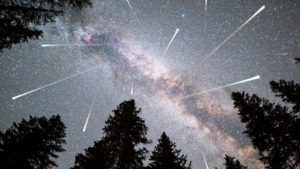
No list of astronomical events in April 2026 would be complete without the Lyrid meteor shower. Originating from the debris trail of Comet Thatcher, the Lyrids are one of the oldest recorded meteor showers in human history. The shower peaks on the night of April 22 into the pre-dawn hours of April 23, producing up to 18 meteors per hour.
This year, viewing conditions for the Lyrids are exceptional. The waxing crescent moon will set shortly after midnight, leaving the early morning sky incredibly dark and free from lunar glare.
Gear and Preparation for the Month
To get the most out of these astronomical events in April 2026, you might want to upgrade your optics. While meteor showers are best viewed with just your eyes, observing comets and planetary alignments requires a bit of magnification.
We highly recommend utilizing our guide to the Best Budget Binoculars for Stargazing to find the perfect grab-and-go equipment for these April viewings. Binoculars provide the wide field of view necessary to capture the sweeping tail of a comet or the grouping of a planetary alignment.
For real-time tracking of these planets and comets, we also recommend checking the exact coordinates provided by the NASA Skywatching Guide
Frequently Asked Questions About Astronomical Events in April 2026
What are the best astronomical events in April 2026 for beginners? The Full Pink Moon on April 2 and the Lyrid Meteor Shower on April 22-23 are the easiest events for beginners to observe. Neither requires a telescope, and both are visible from the comfort of your backyard, provided you have a relatively clear sky.
Will the Lyrid meteor shower be ruined by moonlight? No! In 2026, the moon will be in a waxing crescent phase (about 27% illuminated) during the Lyrid peak. More importantly, the moon will set long before the meteor shower’s radiant climbs high in the pre-dawn sky, ensuring perfectly dark conditions.
Where can I find more updates on astronomical events in April 2026? The night sky is dynamic, especially when dealing with unpredictable comets. Be sure to subscribe to the Astrophiles Youtube channel and follow us on Instagram, and we will keep you updated if Comet MAPS or PanSTARRS unexpectedly flares up in brightness.